Reflecting on 10 years since the Paris Agreement, and Europe’s efforts to keep up on green hydrogen
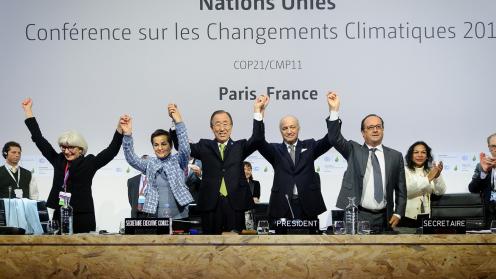
Today we celebrate the tenth anniversary of the Paris Climate Agreement. It is an important reminder of progress amid a challenging geopolitical context.
Since Paris, the world has managed to bend the global temperature curve down from a trajectory of over 4°C to around 2.3–2.8°C. But make no mistake: the impacts of climate change are being felt and we need bend that curve down further.
The good news is that solar is now the world’s cheapest form of energy. And this year the increase in solar and wind outpaced global electricity demand growth in the first half of 2025, with fossil fuels declining slightly. This transition is unstoppable because the economics now favour renewables.
Sadly there are forces looking to slow that inevitable transition. British Prime Minister Keir Starmer was right when he said at the start of COP30 in Belém that "consensus is gone" on fighting climate change. This truth was demonstrated most starkly by the inability of the COP30 final text to repeat the consensus achieved in 2023 to transition away from fossil fuels.
While global UN agreements remain critical (in less than a year the UN’s International Maritime Organization is set to vote again on its Net Zero Framework), we will inevitably now have countries and regions forming coalitions of the willing when it comes to climate action.
Europe remains part of the coalition of the willing on climate even if progress is harder to achieve than a few years ago. This week the EU reached agreement on a legally binding climate target of 90% emissions reductions by 2040. This is remarkable and will ensure that renewables and green hydrogen remain central to the bloc’s climate, competitiveness and independence objectives, not least given its recent decision to permanently stop Russian gas imports and phase out Russian oil.
Europe is working hard to keep up on green hydrogen
Despite well publicised project cancellations and regular assertions that the hydrogen bubble has burst, Europe continues to finesse its regulatory framework and put in place the conditions for green hydrogen to thrive.
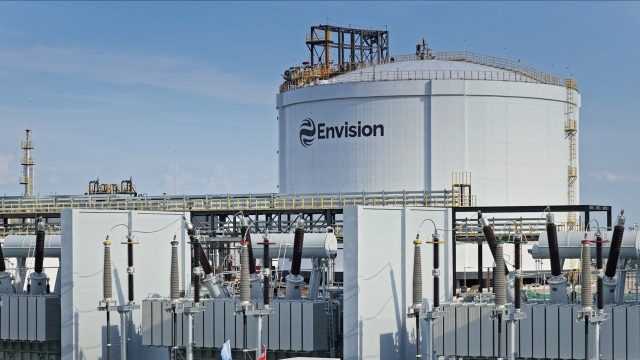
Beyond the obvious positive impact this will have on reducing emissions for Europe’s steel, fertiliser, chemicals, shipping and aviation sectors, it is also essential for Europe to compete with China which is leading the global pack on green hydrogen investment and production capacity (China is home to GH2 member Envision Energy’s Chifeng green ammonia plant which is the world’s largest operational project, and this week China confirmed eligibility of state support to many other green hydrogen projects in the country).
Over the last 10 days or so the EU has initiated further support for green hydrogen including:
-
Launching the third European Hydrogen Bank auction with a budget of EUR1.3 billion supplemented by another EUR1.7 billion from Germany and Spain’s national budgets, bringing the total allocation to EUR3 billion. Funds will be allocated across three separate baskets, one for RFNBO production only, one that incorporates both RFNBO and low-carbon electrolytic hydrogen production (grids which have a 70% emissions reduction compared to a fully fossil fueled grid), and one for RFNBO and low-carbon electrolytic hydrogen in the maritime and aviation sectors.
-
Eight EU member states joined the “Early Movers Coalition” of countries that will participate in an upcoming double sided auction to support green hydrogen-based synthetic aviation fuel (eSAF).
-
A EUR1.2trillion grids package aimed at “replacing barriers and bottlenecks with fast-flowing energy highways and cross-border connections” which is something GH2 as part of the Global Renewables Alliance has pushed for a number of years. The package fully integrates hydrogen infrastructure into the EU’s energy system planning for the first time, and also classifies the SoutH2 hydrogen corridor from North Africa to Italy, Austria and Germany, and the Southwest Hydrogen Corridor from Portugal to Germany as “Energy Highways” which will be fast-tracked with targeted support in terms of financing and streamlined permitting procedures.
-
Germany as the EU’s largest demand centre for green hydrogen has advanced national implementation of the green hydrogen transport target under the EU Renewable Energy Directive. The German cabinet approved a draft amendment to its transport greenhouse gas reduction quota (THQ) to drive the uptake of green hydrogen and its derivatives by 2030. This includes minimum shares of green hydrogen or derivatives in all transport fuel supplied to the market, starting from 0.1% from 2026, increasing to 0.5% from 2028 and then 1.2% in 2030. This is an important demand signal and while much of this green hydrogen will likely be used instead of grey hydrogen to refine conventional car fuels, it will nevertheless have a climate impact and the green hydrogen can be diverted to key lead markets like steel or other chemicals in the future.
While the EU is supporting domestic production and component manufacturing for green hydrogen and derivatives, this will never be enough to fully satisfy its needs. This is perhaps most clear in the ammonia sector where domestic production of grey ammonia has dropped dramatically by 3 million tonnes over the last few years and where the EU has become the world’s largest net importer. The EU’s Carbon Border Adjustment Mechanism becomes operational from 1 January 2026 including for fertilisers using ammonia which should make green ammonia imports more competitive.
Delivering real world progress: projects, manufacturing capacity and infrastructure advance
If you are looking for real world progress in Europe, witness Shell’s 100MW Refhyne 2 green hydrogen project which has reached financial close and has now signed power agreements with multiple renewable energy suppliers; Nel Hydrogen’s announcement today that it has taken a final investment decision to build an additional 1GW of manufacturing capacity at its Herøya factory for its next-generation pressurised alkaline electrolysers (hot on the heals of Topsoe’s inauguration of Europe’s largest Solid Oxide Electrolyser Cell factory at the end of October); and German gas pipeline operator Gascade’s announcement this week that it has successfully converted a 400km natural-gas pipeline to carry hydrogen from the country’s Baltic Sea region to industrial clusters in Saxony-Anhalt with this infrastructure now available to the market.
No-one can accuse Europe of not trying to scale green hydrogen. GH2 will continue to work with partners to ensure it succeeds in order to meet its climate and energy independence goals.
Joe Williams,
CEO, GH2
Have your say on RFNBOs
The ICF, together with Fraunhofer ISI and Artelys, is conducting a study on behalf of the European Commission to support the ramp-up of green hydrogen production in the EU and in third countries. A key element of this work is the assessment of the RFNBO delegated acts’ additionality, temporal correlation, and geographical correlation criteria for electricity procurement for RFNBO production which have been much debated.
Register here for an information session on 16 December 10:00 – 11:00 CET
Where Green Hydrogen Delivers the Greatest Emissions Reductions
🗓️ 17 December 2025 | 10:00 – 11:00 CET
As green hydrogen scales globally, its climate impact will depend on how and where it is deployed.
GH2 is hosting a webinar presenting recent Nature Energy study by Dr.Tom Terlouw, based on analysis of 2,000 operational and announced low-carbon projects. A following discussion moderated by GH2 CEO Joe Williams will consider its implications.
Register here for the event