A Renewables Action Plan and the need for fossil-free fertiliser
Together with our partners in the Global Renewables Alliance we have published an action plan on the urgent shift to renewables needed given the latest crisis in the Middle East.
The crisis once again exposes the fragility of a fossil fuel dependent global energy system, and we urge governments to “treat the oil and gas price shocks reverberating through the world economy as a pivotal turning point and urgently accelerate the transition to renewable energy.”
The action plan makes clear that we need to move swiftly to a system based on renewable electrification. Green hydrogen enables us to take renewables further to key parts of our economy like iron and steel; chemicals; and shipping and aviation.
This week we also challenged a set of industry associations which had called for the EU to drop its prioritisation of renewable green hydrogen when it comes to public support measures such as the European Hydrogen Bank where today the EU announced it had received 58 bids under the third European Hydrogen Bank auction all vying for a EUR 1.3bn budget. Diluting that support by providing public finance for blue hydrogen made from fossil gas is wrongheaded given the crisis in the Middle East.
Green hydrogen is also crucial for food security. Current fossil gas-based fertiliser production today is deeply vulnerable to price volatility. Green hydrogen-based ammonia produced using homegrown renewable energy or from a wide array of trade partners, provides a viable pathway to reduce dependence on fossil fuel imports and volatile supply chains when making fertiliser.
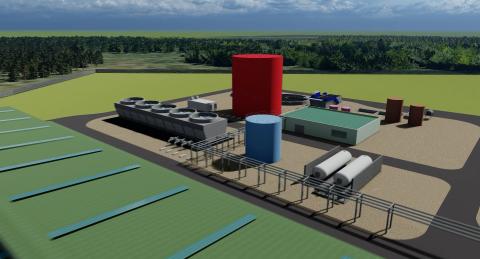
The positive momentum for Atome’s Villeta Project in Paraguay (see below) which is being backed by an impressive number of development finance institutions is a perfect example of how Paraguay and the wider Latin America region can move to homegrown renewable fertiliser instead of uncertain and volatile imports of fossil fertiliser.
Joe Williams,
CEO, GH2
Equity unlocks momentum on green fertiliser, and a model for de-risking at scale
Atome’s Paraguay project is moving towards FID with early equity commitments de-risking a $420m DFI-led financing package, enabling IFC, EIB and others to step in alongside a secured Yara offtake agreement. It is a critical final step to underpin revenues and unlock debt. This sequencing is decisive: equity absorbs early-stage risk, anchors the project, and crowds in concessional and commercial capital. It is a clear signal that bankability is emerging where risk is structured and shared upfront.
This is exactly the model GH2 is advancing through our work with the Dutch Enterprise Agency (RVO): de-risking green hydrogen investment in North Africa by mapping financiers and instruments, aligning MDB and DFI interventions, identifying blended finance and guarantee mechanisms, and convening a Finance Coordination Dialogue to move towards coordinated, sequential financing structures.
The current crisis is again exposing the fragility of gas-dependent fertiliser systems, with direct implications for food prices and food security. As Yara’s CEO recently warned in a BBC interview, fertiliser disruptions translate directly into food insecurity, with gas-driven ammonia markets exposing global agriculture to repeated shocks. With fertiliser accounting for around 70% of ammonia demand, and ammonia production contributing roughly 1.8% of global emissions, scaling green ammonia is not just an industrial transition. It is a food security imperative in an increasingly volatile geopolitical context.
GH2’s forthcoming fertiliser brief will also underline why this matters now.
IMO Call to Action gains support and new data on renewable maritime fuels costs
The Call to Action to adopt the IMO’s Net Zero Framework in 2026 continues to gather backing, with new signatories including Sustainable Markets Initiative, IMAL Initiative for Climate and Development and Associação Brasileira da Indústria do Hidrogênio Verde (Brazil’s green hydrogen association). Adopting the Framework intact is key to unlocking demand for green fuels such as green hydrogen and ammonia, and scaling the required vessels and infrastructure. GH2 continues to welcome companies and organisations that share this ambition to join the initiative.
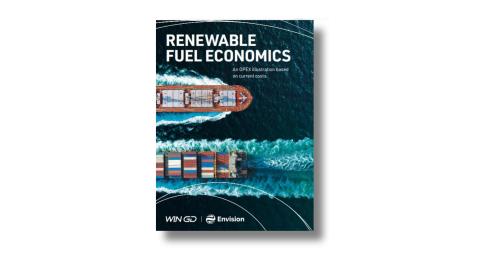
Envision and WinGD, both signatories to the Call to Action, have released a new study on the operational costs of renewable maritime fuels. Under supportive regulatory conditions, the study suggests that green ammonia can reach cost parity with conventional fuels.