Events in the Middle East and a call to action on a global shipping
Our thoughts are with the people across the Middle East and beyond who are living through fear and violence. It has been less than a week since the crisis began but the impact is being felt far and wide.
Energy and food security are two areas where the volatility of fossil fuel prices and fossil fuel supply are stark.
At the time of writing, a barrel of oil has hit USD 90 and European natural gas was priced at EUR 52 per MWh which is the largest weekly gain since February 2022 at the beginning of Russia’s invasion of Ukraine. Prices are nowhere near what they were back then but it is still very early days and the price movements in just under a week are huge. Supplies are being curtailed and transport through the Strait of Hormuz has largely ground to a halt.
The region is also key for natural gas-based ammonia production which is key for fertilisers and therefore food production. Saudi Arabia, Qatar and Oman which all produce both natural gas and ammonia have all been targeted.
The fact is that 75% of the world is dependent on fossil imports and almost no-one is immune.
We simply need to move away from fossil fuels and renewables are key. Over ninety percent of countries have renewables potential vastly greater than their current demand. As the world moves to electrification with renewables we can move away from fossil fuel price shocks. More homegrown energy potential and a more diverse set of supply partners. China is taking the lead here by including renewables and hydrogen prominently in a draft of its 15th five-year plan this week; India is making similar moves; and Europe is doing its best too (see below on the proposed EU Industrial Accelerator Act).
Technologies built on renewables like green hydrogen can take that renewable energy further to steel, fertilisers, chemicals and shipping. The events of the last week are a reminder that the shift needs to happen quickly.
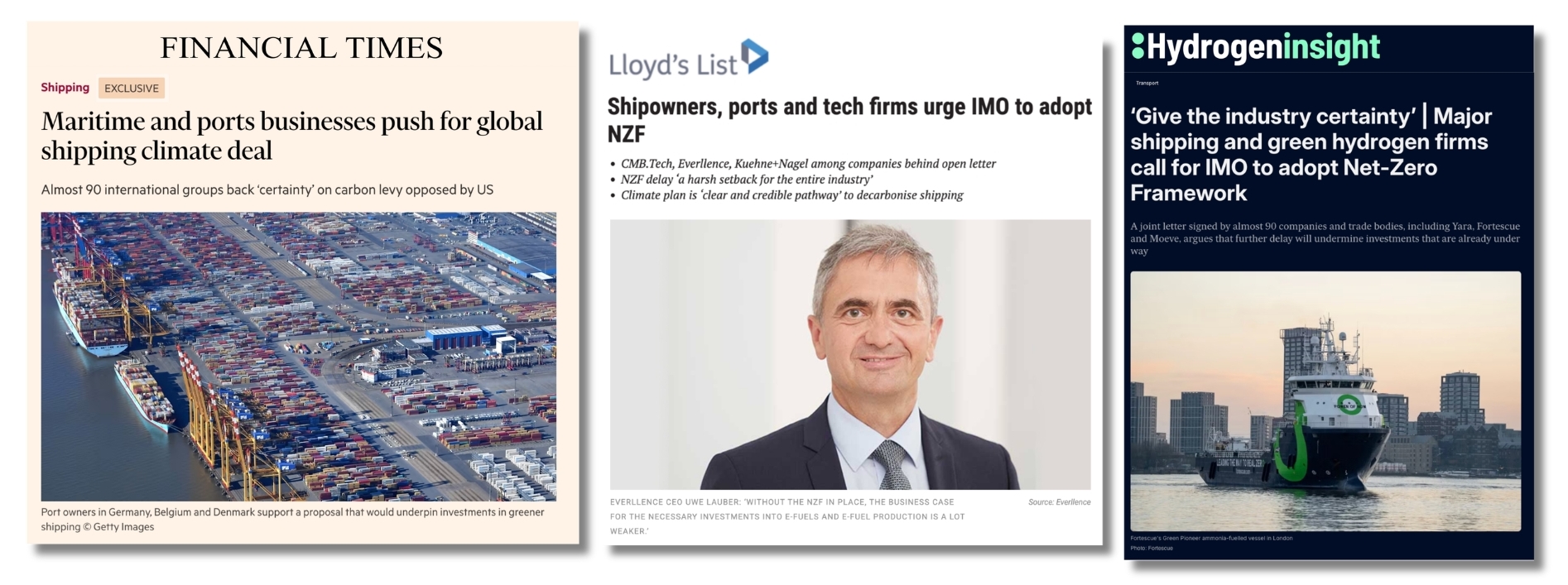
In shipping, this week nearly 100 ship owners, ports, green fuel producers, technology providers and other partners including GH2 called on member states of the International Maritime Organisation to adopt the Net Zero Framework (NZF) this year.
The NZF sets emissions intensity targets for ships. If those targets are not met, compliance fees must be paid. Ships that meet the strictest emissions targets which run on scalable green hydrogen derived fuels such as e-ammonia, e-methanol or e-methane will earn tradable credits and be eligible for financial rewards from a multibillion-dollar fund to stimulate the uptake of green fuels.
The letter which featured in the Financial Times shows there is momentum for a deal on the NZF this year and serves as an encouragement for countries to support the measure.
Joe Williams,
CEO, GH2
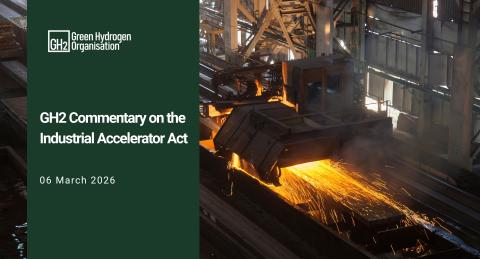
GH2 Commentary on the Industrial Accelerator Act
Europe continues to position itself as a global frontrunner in catalysing markets for green hydrogen and its derivatives by deploying robust policy frameworks, demand-side mandates, and large-scale funding mechanisms. This was further reinforced this week when the European Commission proposed the Industrial Accelerator Act (IAA). In line with the recommendations of the Draghi report, the IAA introduces targeted ‘Made in EU' and / or low-carbon requirements for public procurement and public support schemes. These will apply to selected strategic sectors, notably steel, cement, aluminium and cars, establishing a framework that can be extended to other energy-intensive sectors such as chemicals. While the proposal still needs to be approved by member states and the European Parliament, the IAA has significant implications for green hydrogen as a critical input for decarbonising these industries.
Read more in our blog
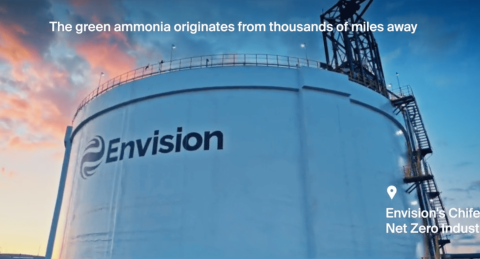
Envision has successfully completed the world’s first commercial-scale shipment of green ammonia
GH2 member Envision Energy has supplied the world’s first commercial-scale shipment of ammonia produced using green hydrogen to South Korea’s Lotte Fine Chemical. The ammonia was produced at Envision’s 500MW Chifeng facility in China, currently the largest operational green hydrogen project by electrolyser capacity. Lotte plans to use the imported green ammonia for emerging applications including maritime fuel, power generation through coal co-firing, and as a carrier for clean hydrogen, supporting efforts to expand low-emissions ammonia use across Asia.
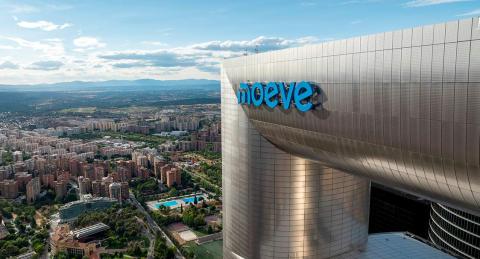
Moeve reaches FID on first phase of Europe’s largest green hydrogen project
Spanish energy producer Moeve has taken a final investment decision on the first phase of its 2GW Andalusian Green Hydrogen Valley. Construction of the 300MW Onuba electrolyser will now commence in the coming weeks at the La Rabida refinery in Huelva. The project was scaled down from 400MW due to grid constrains but it is still expected to become Southern’s European largest green hydrogen facility. Output is estimated at 45 000 tonnes per year, mainly for aviation and shipping fuels and industrial decarbonisation. Backed by EUR 304m in Spanish government funding, the complex will include a 180MW solar PV plant and could expand if additional grid capacity becomes available.
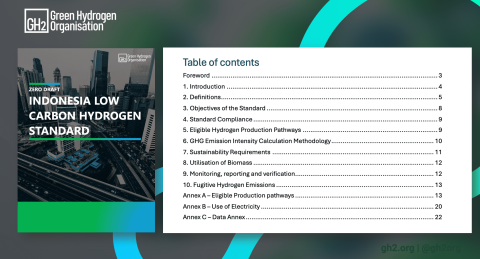
Indonesia's Low-Carbon Hydrogen Standard (LCHS) is launched
With the release of SNI 9435:2026 on low-carbon hydrogen (LCHS), Indonesia has formally entered the global conversation on hydrogen standards. This is significant as for the first time producers, investors and policy makers have shared reference point for what qualifies as low-carbon and clean hydrogen in Indonesia.
The Green Hydrogen Organisation has been involved in this process from the beginning. We worked closely with the Ministry of Energy and Mineral Resources and Technical Committee 27-11 (TC 27-11) during the early drafting phase and later submitted detailed technical input during the public consultation coordinated by the National Standardisation Agency (BSN).
Compliance is voluntary for now, giving the market space to test and evolve as projects scale.
Read our full analysis and access the original standard here